


Every instrument, sample, and sound has parts of it that we notice and parts that might escape our attention. When you listen to a piano, what do you hear? The gentle, sonorous tail of a note as it rings out, or do you hear the clash of frequencies that exists for a moment when a key is struck? Do you hear the groan and thump of the sustain pedal being used? Can you even hear the breath or shifting posture of a pianist as they play? Artists like Ólafur Arnalds have gained popularity lately by intentionally exposing these parts of a performance – not only leaving them in place but even exaggerating their presence.
The beauty of texture and noise in music is something I discussed at length in my last blog post, but today I’d like to focus on a similar concept within the frequency spectrum of a sound itself. Just like there’s an interplay between tonality and texture in a sound, so too is there a balance between a sound’s harmonic frequencies and inharmonic frequencies. The former are what we tend to latch onto – what you hum when you think of a melody – but the latter are what give a sound its unique timbre.
Today, we’ll take a look at how my new plug-in, Coastline, lets you explore and navigate the different qualities of a sound, and how it can be used to bring something fresh and interesting to a composition or mix (while staying true to your original input). But first, let’s talk about the math of music.
Get Coastline (or try for one week free)
Frequency relationships
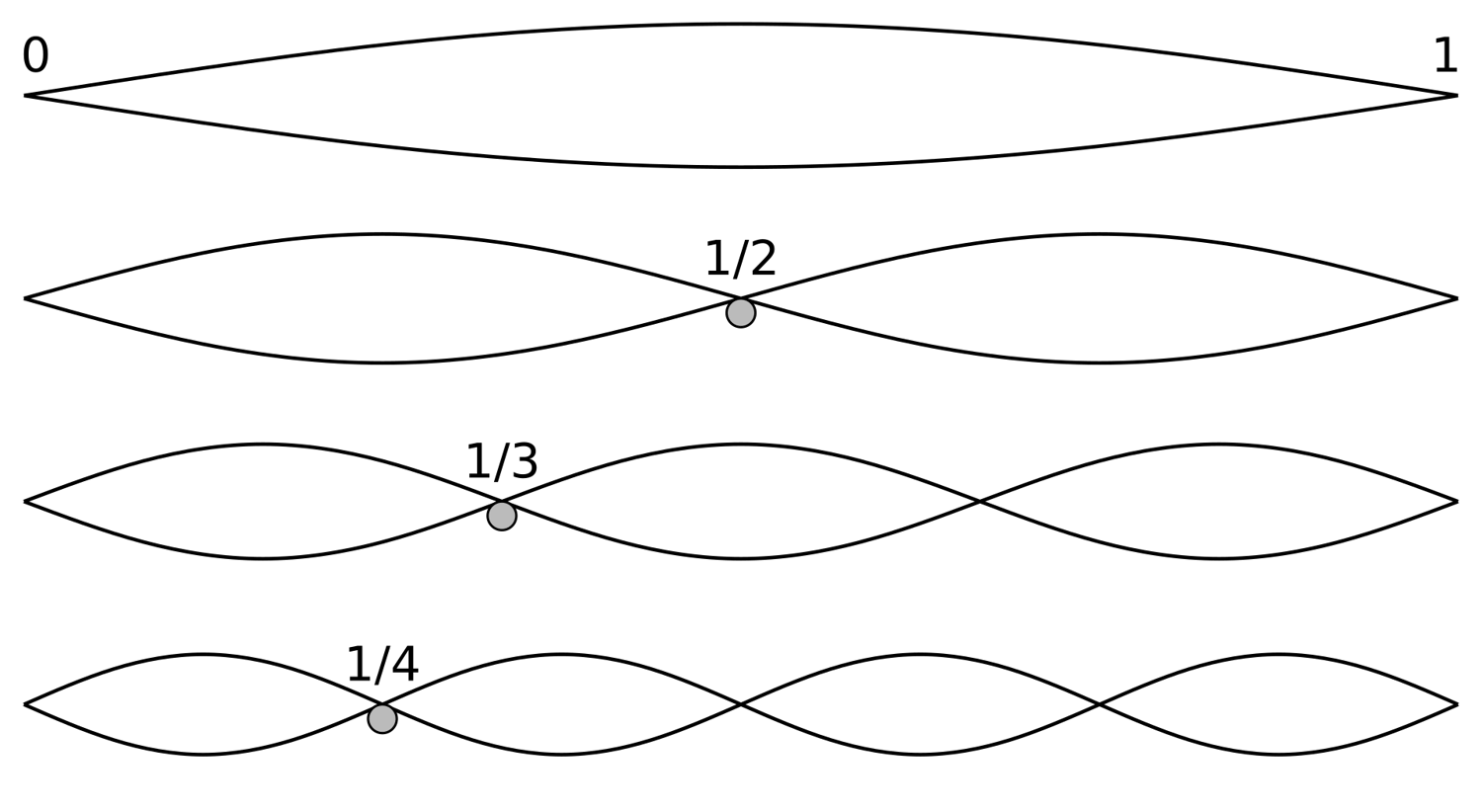
If you take any two frequencies, you can find their relationship by the ratio of their periods. When a frequency is twice that of another, we hear it as an octave up. Fun fact: apparently humans are one of the only animals that hear this way, likely an evolved trait due to the differences in male and female voices. So when you play the piano, your cat or dog hears you play 88 unique notes, not 12 notes across different octaves!
There is also a natural relationship between frequencies that we call the harmonic series. This tells us the natural overtones that you tend to hear in a sound in the real world, such as when a string oscillates. We tend to hear the fundamental frequency, but also overtones that are two times the fundamental, three times, four times, etc. When you hear a saw wave played on a synthesizer, you more or less hear this exact series of overtones, all together at once.
All sounds are composed of a fundamental frequency and overtones. So when we say that a particular frequency is “harmonic”, it means that it belongs to the series for its fundamental. An inharmonic frequency means that it is absent from the fundamental’s natural series of harmonic overtones. When you hear an instrument with a very consonant sound, such as a softly played piano or a nylon-string guitar, you’re hearing almost entirely overtones present in the harmonic series. But if you hear an old bell, or a saxophone being overblown, or a cymbal, you’re hearing all kinds of inharmonic frequencies that color that sound, and subvert your natural expectations of what a “note” should sound like.
The challenge of mixing
Let’s zoom out for a moment, before getting to Coastline and tying things all together.
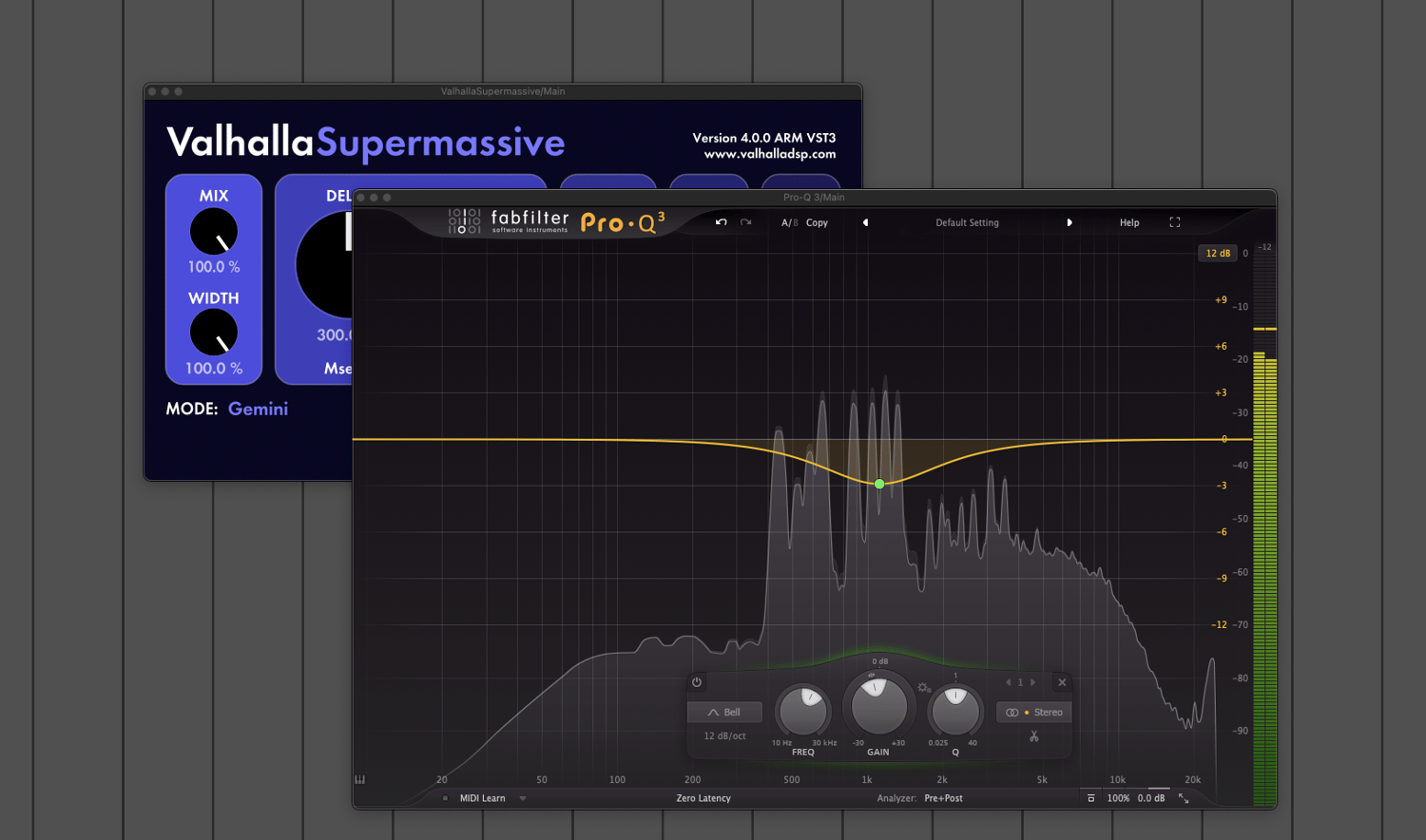
When using most audio effects, like a reverb or delay, there’s an inherent challenge to balancing them in an arrangement and mixing them. We all love a good reverb, but these effects have a core problem: they mirror the frequency spectrum of any sound you run through them. Reverbs and delays quite literally just echo whatever you pass into them, so the result is that you might end up overloading a particular part of the frequency spectrum. This might be a nice effect, or it could spell disaster.
There are plenty of tricks to address this – EQ scoops, mid/side processing, sidechain compression – but these don’t change the fundamental issue of “input = output”. One of the primary ways of truly fixing this is to start changing the pitch of playback. Consider a shimmer reverb, which echoes your sound an octave up. Now the reverb is truly contributing something new to your sound; it echoes it, but it diverges from the original frequency spectrum, and occupies a different part of the mix as a result. You might also play around with modulation on a reverb or wow and flutter on a delay to achieve a similar effect, in a tighter window.
So changing the entire frequency range of the output is a valid solution, but what if we could instead change the balance of the frequency range, to create something new?
Enter Coastline
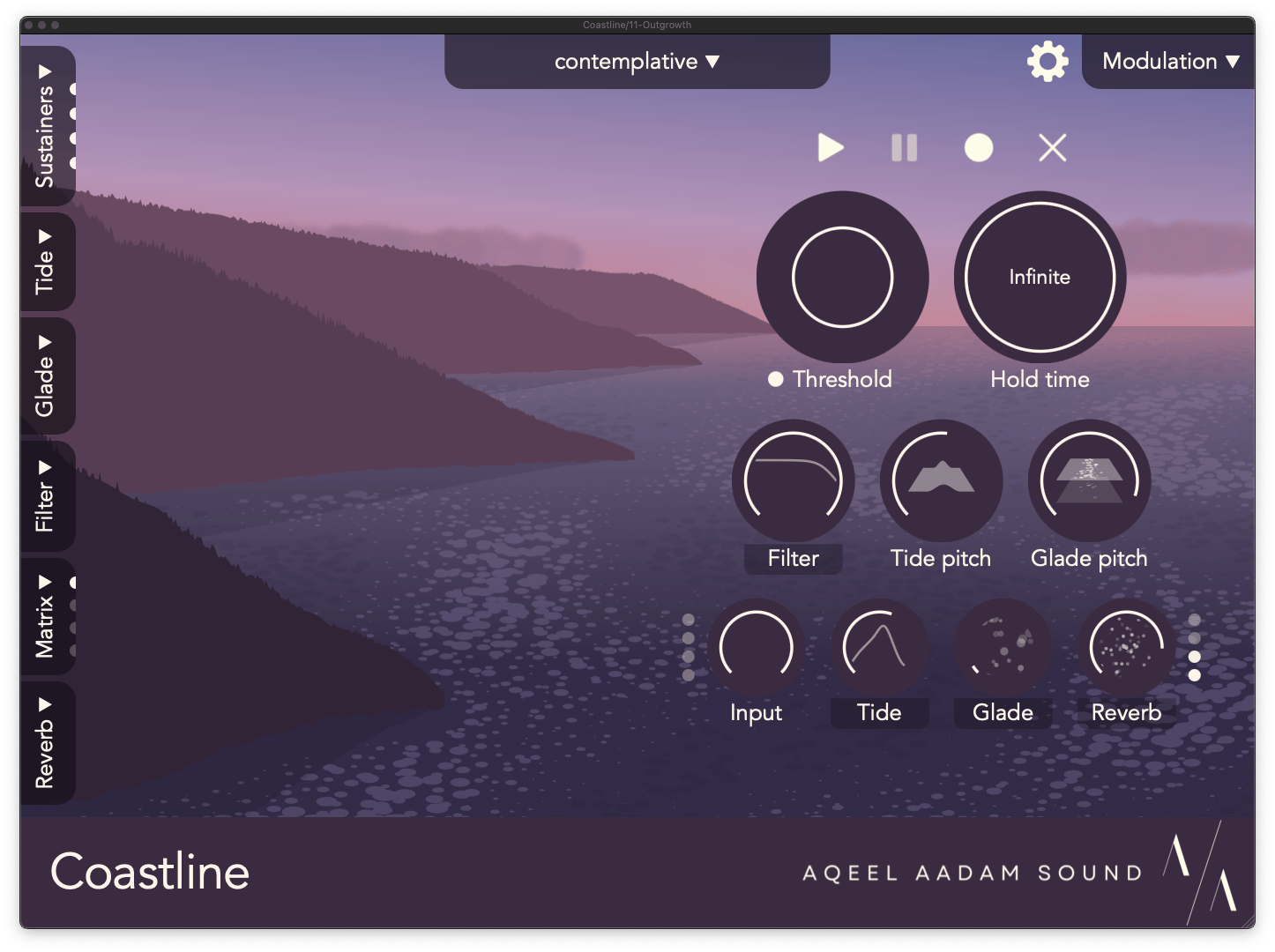
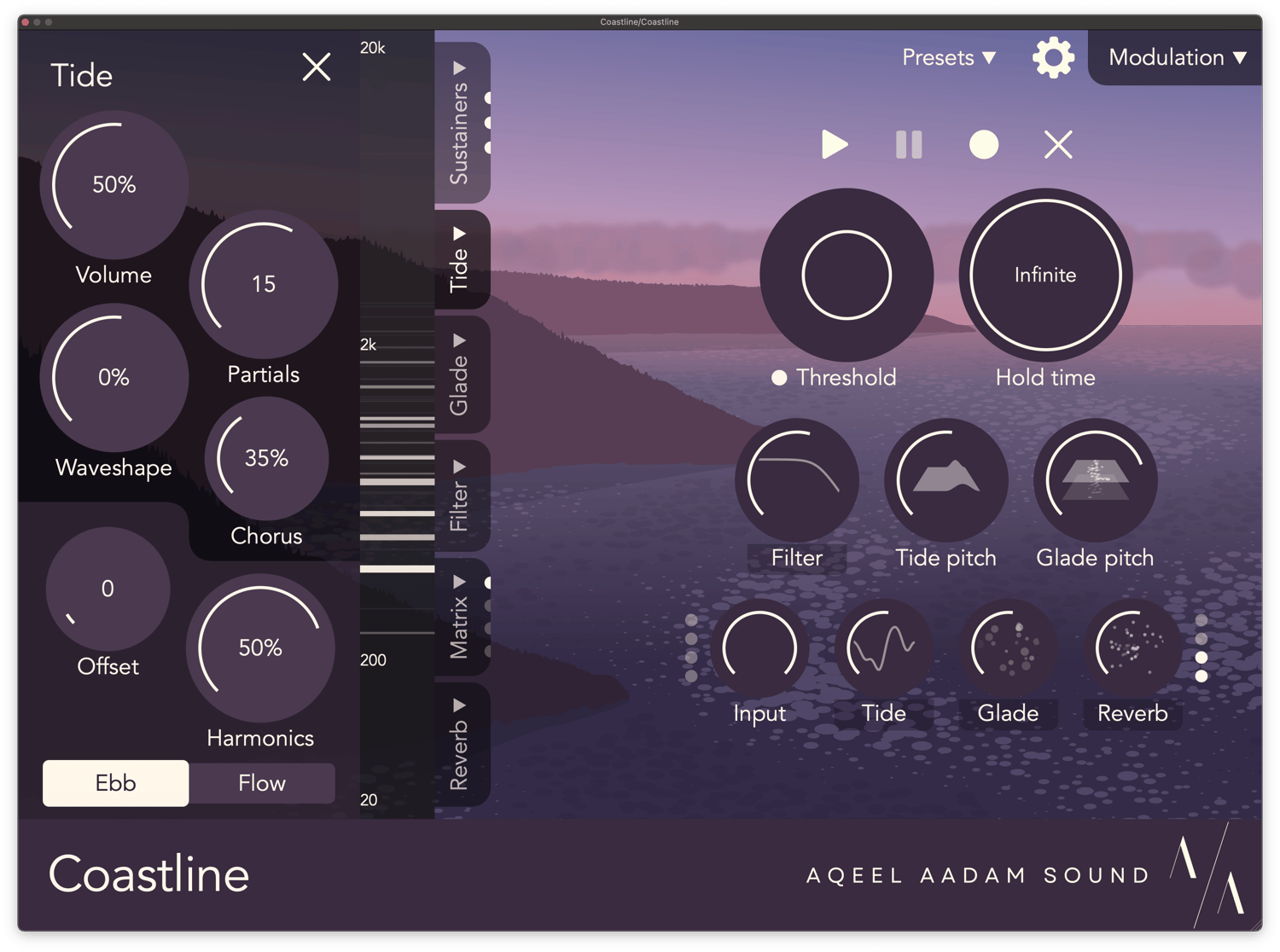
Coastline’s Tide engine lets us do some interesting things to the frequency spectrum of our input. At its most basic, Tide will essentially find frequencies in a signal, and resynthesize the signal with oscillators mapped to those frequencies. It’s an additive synthesizer that tries to mirror the original input. By default, the volume balance between the frequencies matches the input’s as well.
But what if we changed this? Tide goes a step further and determines which frequencies are harmonic, and which are inharmonic. As we previously established, we know two frequencies are harmonically related if one of them belongs to the harmonic series of another. So Coastline first figures out which tones seem to be harmonics of one another, and places these to one side, while considering the remaining frequencies to be “inharmonic”. Phrased another way, it finds which frequencies seem related to one another, and which seem to be unique, one-offs.
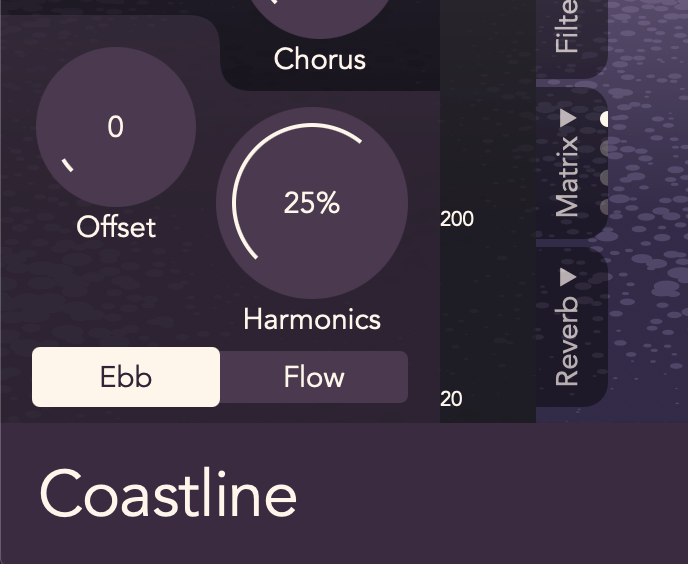
Tide’s Ebb mode lets you navigate this space, and decide how harmonic or inharmonic the output of Tide should be. Towards the harmonic end of things, Coastline becomes very sonorous, rounded, and really mirrors the input signal. In this case, Coastline is truly “humming along” with your sound. But you can push in the opposite direction, too, to really draw out and celebrate the inharmonic parts of the signal.
When you explore the inharmonic side of things, you tend to reveal the nooks and crannies of a sound that you may not have noticed. You’ll start to hear the unexpected overtones present in a sound that contribute to its sound quality without taking center stage. We start to find ourselves listening to the forgotten part of a sound, and start to hone in on its uniqueness. When we do this, the output of Coastline starts to strongly diverge from the input, but it continues to stay related to the input. We aren’t contributing anything new, but instead we’re reimagining the balance of the input and putting forth parts of it that were muted before.
This is a fairly new way to use an audio effect. Like a reverb, Coastline perpetuates the frequencies of its input, but it lets you grab hold of that spectrum and move it around to your liking. We already know the fundamental frequency of this note – why sustain it and make it doubly more obvious? Why not give some spotlight to the other parts of a signal, and create an output that is more than the sum of its parts?
Closing thoughts
Coastline was designed as a harmonic workstation, letting you shape the sound that passes through it like putty. I hope this write-up give you some good insight into one of the core parts of sound designing with Coastline.
By the way, my friend TJ just released an excellent EP using a ton of Aqeel Aadam Sound products. Check it out here!
I also had the pleasure of chatting with Steve Boykewich on his podcast Slow Fade recently. If you'd like to hear more about the process of designing these products and bringing them to market, take a listen!