


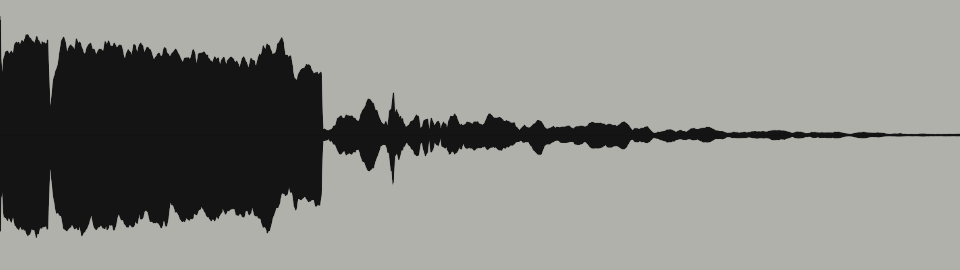
Rarely in life do we find moments of true silence. The same is true for samples. We tried to celebrate this fact with Outgrowth, and give you the tools to unearth the beautiful texture, noise, and artifacts that can make samples truly feel alive.
Outgrowth’s Subvert control
Probably the most unique control in Outgrowth (and possibly my favorite) is Subvert. This single knob is typically my starting point whenever I’m working with Outgrowth. If you’re unfamiliar with it, Subvert is basically a perfect compressor. Because Outgrowth works with samples, rather than live input, we can essentially construct a compressor that has an infinite lookahead. It knows exactly what volume is coming up, and exactly what adjustments to make in anticipation.
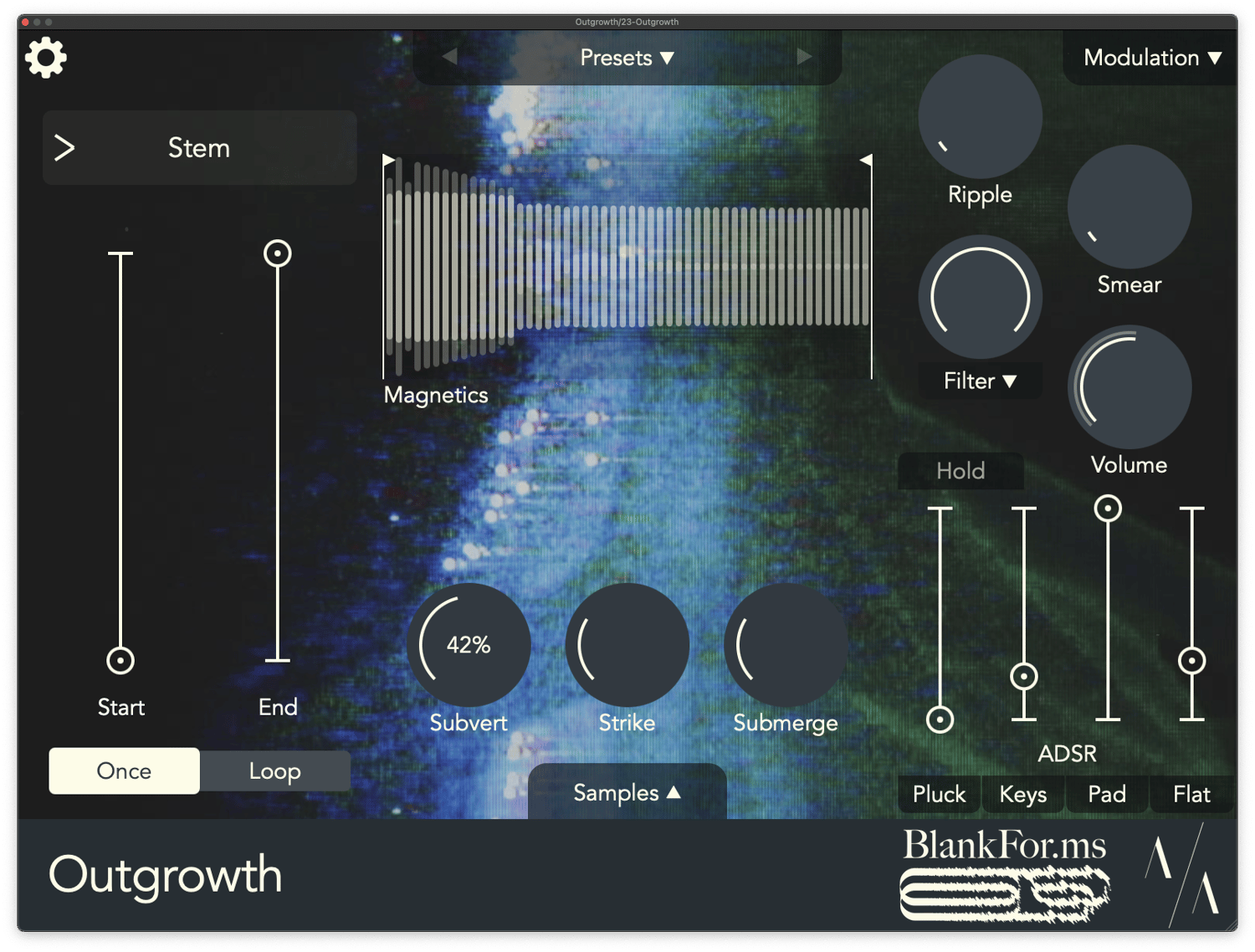
The most basic usage of Subvert is to essentially flatten the volume of a sample. This is an extremely helpful sound design tool for a sample player, since the instrument has its own volume contour (in the form of an ADSR) that it wants to enforce for each note played. With Subvert, you can remove the inherent volume contour of the sample itself, and use the ADSR to sculpt the exact response you want. You can turn a piano strike into a slow pad, or turn a soft and growing sound into an immediate pluck.
But my favorite byproduct of this is that we aren’t just flattening the volume of a sample – we are boosting the volume of the quiet sections, and starting to bring out the areas that you may have thought were just silence. For me, this is where working with samples truly becomes magical. Most samples don’t have perfect digital silence in them, especially samples of hardware devices. There’s going to be a noise floor, tape hiss, or a hum from the audio equipment. If the sample was recorded with a live mic – there’ll be even more to discover. You won’t be surprised to learn that Outgrowth pairs extremely well with BlankFor.ms' samples, which are stuffed with tape texture.
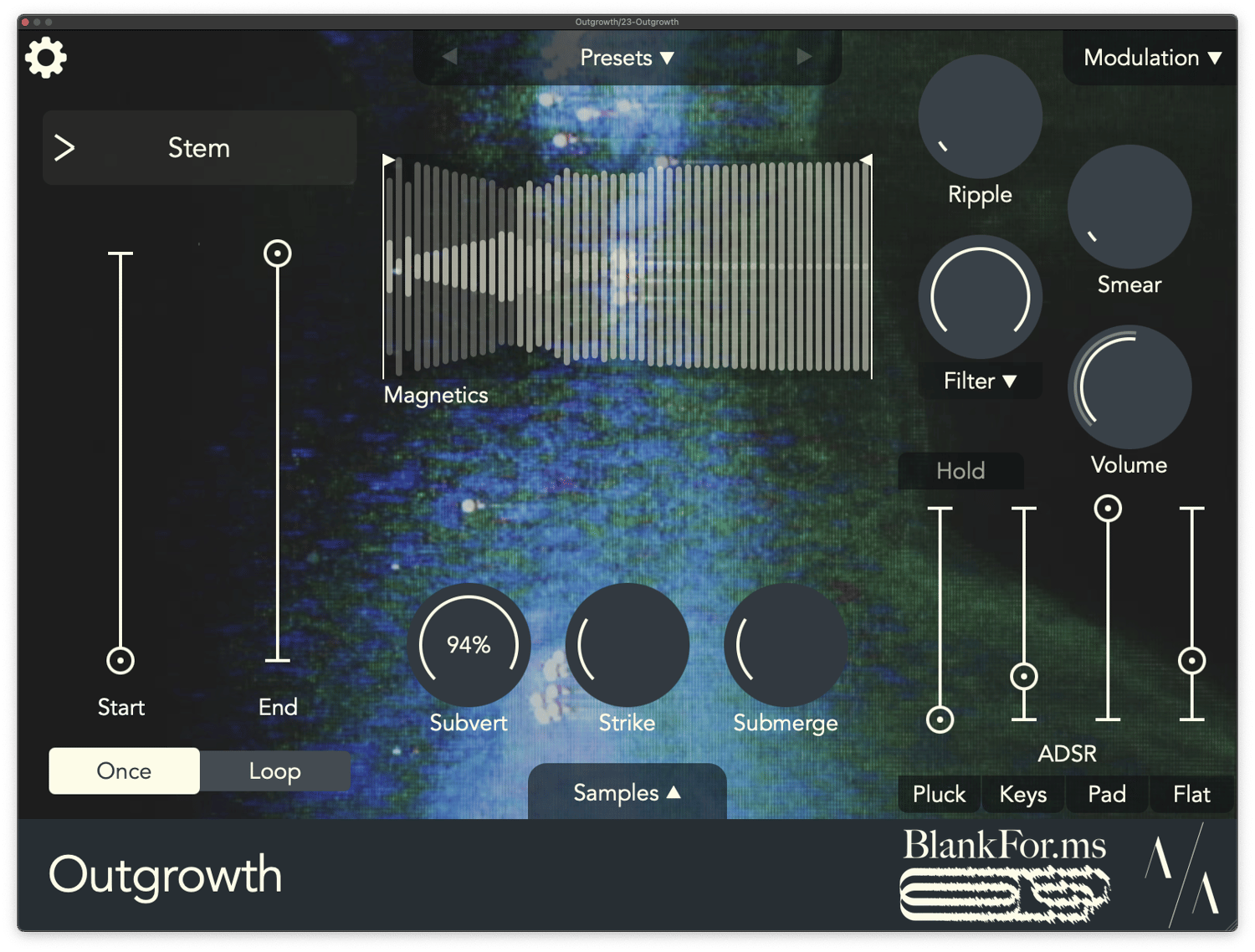
Subvert lets you take this idea even further than its logical conclusion, and you can even invert the volume contour of a sample. Outgrowth lets you declare “I actually want to hear the cruft more than the original sound itself”. One of my formative musical memories was when a friend showed me Bad Vibes by Shlohmo in high school. This album kind of broke my brain – the way it was absolutely dripping with texture, and how all that noise and context was basically louder and more important than the “music” itself. It’s a living, breathing sound that I love and can be easy to miss out on in today’s world of super clean digital recordings.
Exploring silence
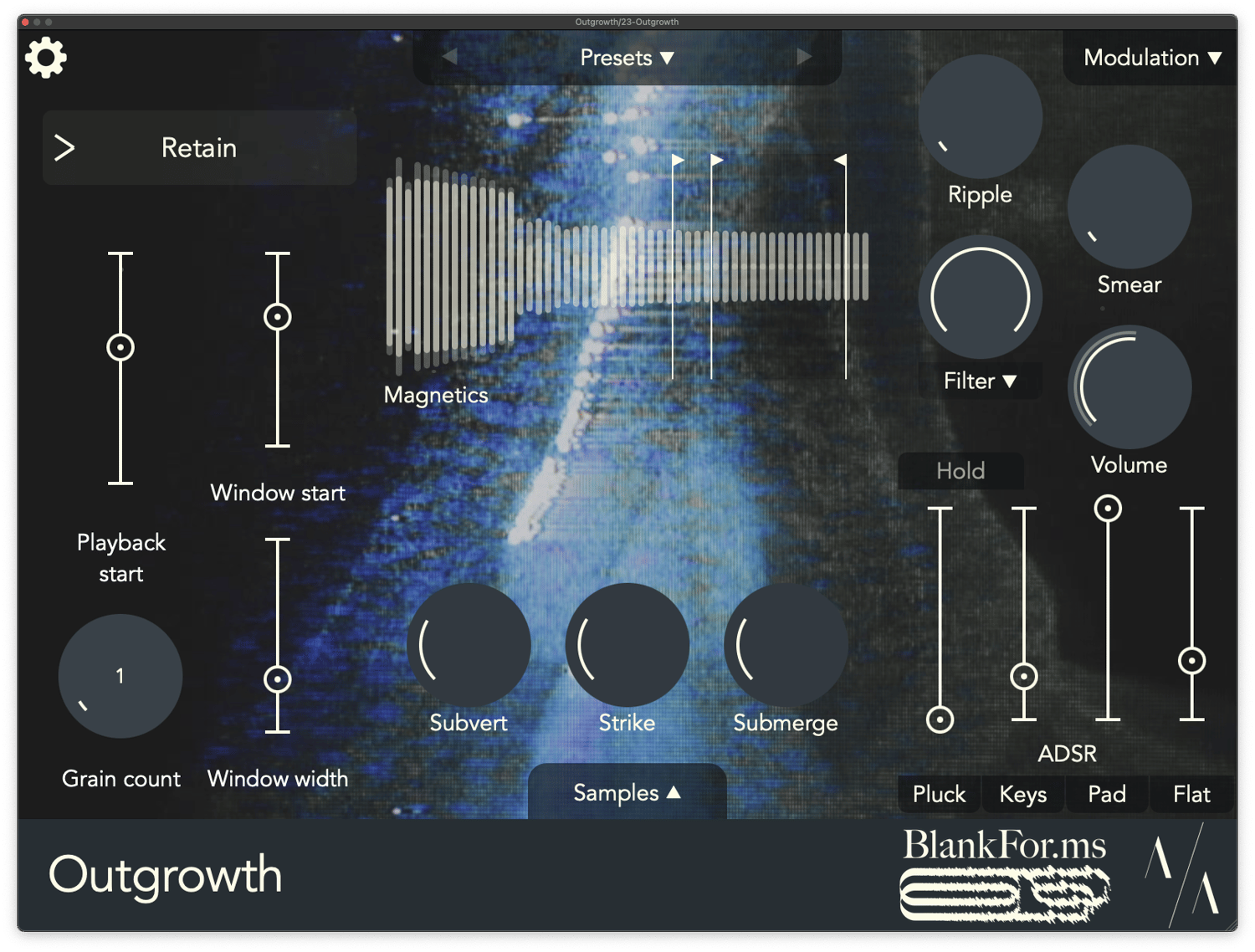
One of the first things I often do with Outgrowth is to target the quiet portion of a sample, and maybe even a section that appears silent. Cranking up Subvert reveals what was once hidden. We’ve all heard a Rhodes or a Moog before – but what we haven’t heard is that instrument in this particular context.
A trick I like to use with Outgrowth is to record samples that are intentionally too long. My Juno is a favorite source here – if you know anything about the Juno, it’s that the chorus is legendarily noisy. That might be a turn-off to some people, but it’s something that I like to intentionally make use of. I’ll record a long synth tone with the chorus on, let it completely fade out… and keep the recording going to capture some of that beautiful noise floor. The actual volume of that sample fluctuates pretty wildly – the synth itself might be 30 or 40dB louder than the noise floor. But with Outgrowth’s Subvert, you can make the entire sample the same volume. I love to load samples like this into the Retain engine, to create a granular synth which might start tonal but wanders into this noisy section.
These noisy tails can be really interesting to pair with performance and modulation, as well. With a sample like this, you can do some pretty cool stuff just by modulating where playback begins, or what section of the sample Retain is pulling from. Sometimes I’ll set up a patch that becomes more tonal with more velocity – and conversely, becomes noisier when it’s played with a softer touch. Another fun idea is using aftertouch or MPE pressure to move the window in Retain or Reflect, and you can performatively navigate into a noisier part of the sample.
All of this pairs really well with Outgrowth’s brand-new ability to record samples. I think it really dials up the ephemerality of the experience, and encourages you to just hit record and see what happens. You might be surprised what you find! If you’re anything like me, your home studio is pretty unoptimized and has all kinds of hums and noise floors. Sometimes this can drive you up the wall, but you might find that it adds a layer of character to a sound that you may not have ever expected.
Closing thoughts
Aqeel Aadam Sound is all about staying curious and keeping an open mind when it comes to the music you make, and the act of making it. I hope this post inspires you to try out a couple of new things!
I also want to take a moment in these posts to shine a spotlight on some members of our community that are making beautiful things with these products. Check out Thoughts Persist by Fields We Found, which has a bunch of Outgrowth on it! If you have anything that you’d like to be featured, please shoot me a message.