


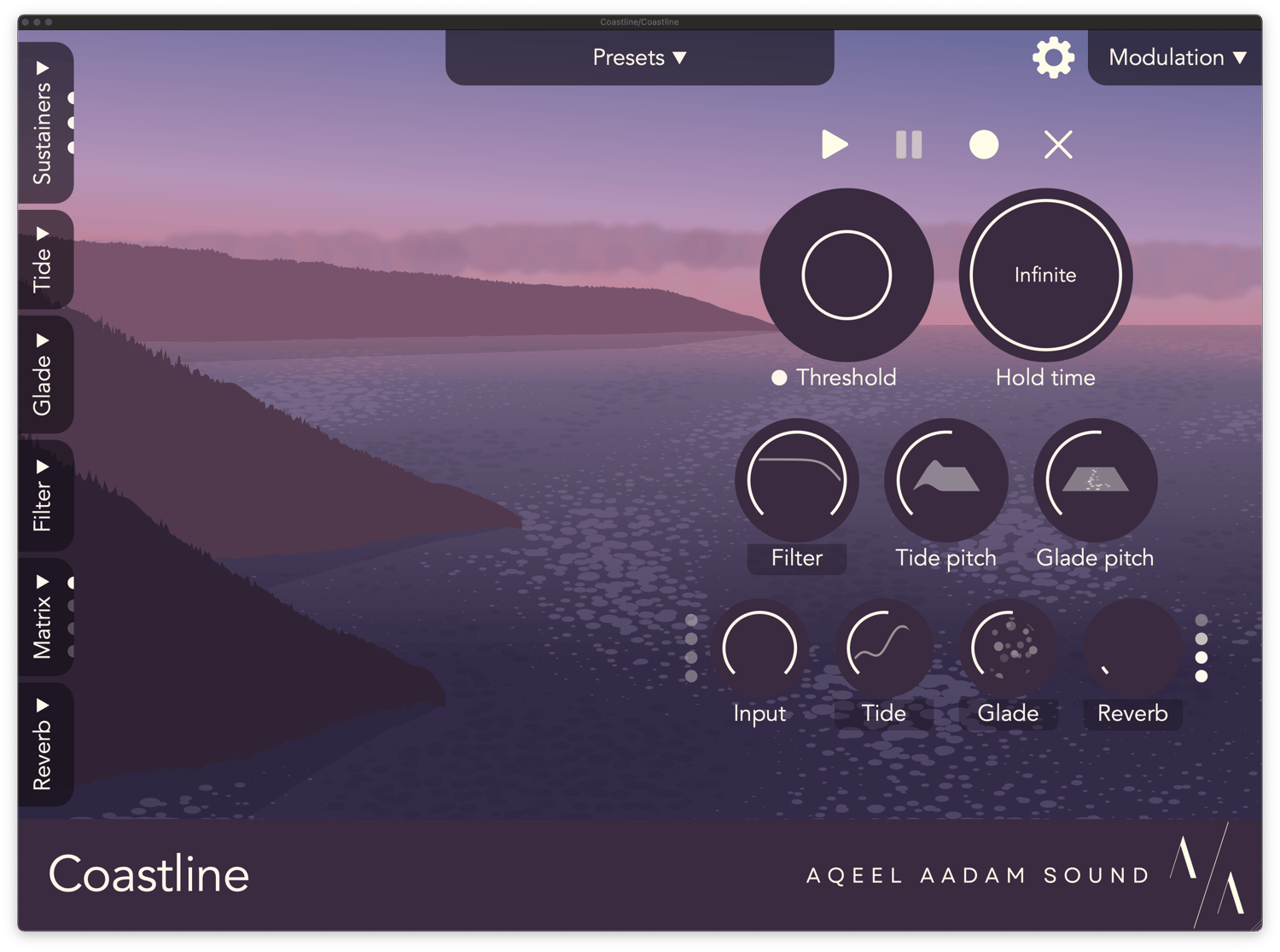
My latest plug-in, Coastline, is available now. It’s an atmosphere machine, a texture generator, and a harmonic workstation. It uses additive and granular synthesis, audio intermodulation, advanced filtering, custom samples, and more – all in the service of adding depth and character to your music. If you’re a fan of Outgrowth’s timbre, Waymaker’s modularity, or Weeping Wall’s workflow, I think you’ll really enjoy it. Read on to learn how it works – but first I’d like to talk a bit about how Coastline came to be.
Get Coastline for macOS/Windows/iOS in VST3/AU/AAX/AUv3 format.
The coast is waiting
I’ve learned a lot since I started Aqeel Aadam Sound three years ago (well, back then it wasn’t called “Aqeel Aadam Sound” – it was just me tinkering around with what would eventually become Weeping Wall). Today, I’m releasing Coastline, which is something that I’ve started and gave up on multiple times over the years, because I wasn’t ready and didn’t have the skills to build it until now.
Coastline was actually the first product that I ever imagined for AAS – an atmospheric texture generator that can create ambience to surround whatever you send into it. It sustains sounds infinitely, with a clickless and resynthesized version of the input. I’ve leaned on eurorack for this for almost a decade now, and this was the first technique that came to mind when I thought “what could be a really cool plug-in?”. At the time, I knew nothing about DSP, plug-ins, designing products, or really anything at all that I know now, and Coastline ended up being too ambitious for a first project. I pivoted to Weeping Wall since, let’s be honest, loopers are a bit simpler to build than resynthesizers. :) I actually started building Coastline before Weeping Wall even released, but never finished it.
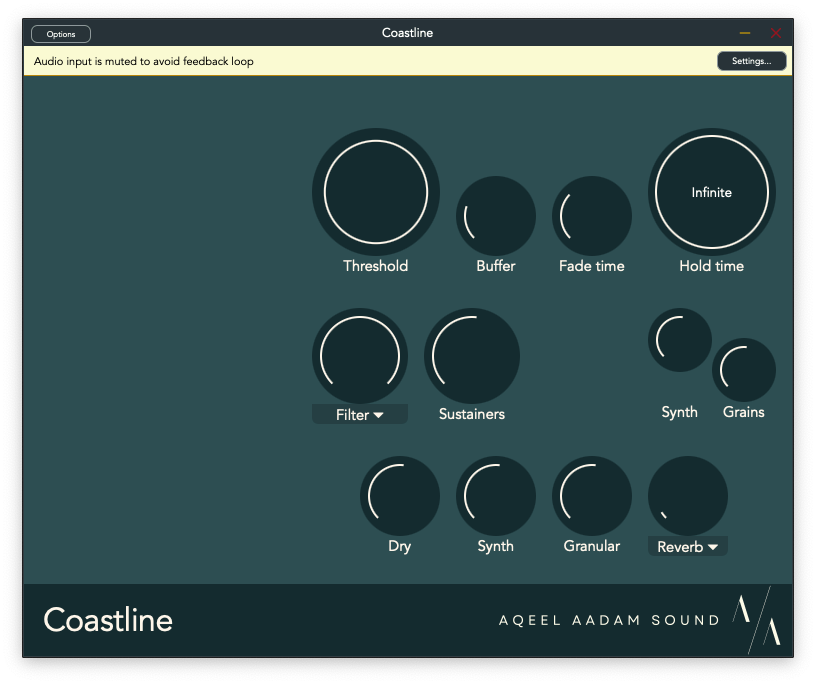
Over the years, Coastline wasn’t even on the backburner; it was stashed away in a cupboard. I’d open up the Xcode project every 6 months or so and run away screaming. It was something that I might show a friend after two hours of playing with a project that I was actually proud of. It finally resurfaced when Tyler and I built Outgrowth, and a lot of the code for Outgrowth actually came from Coastline originally (the pitch detection algorithm, the Radiate engine, and a couple other bits and pieces). With Outgrowth under my belt, I felt it was finally time to get the monkey off my back and finish this thing. And, to be honest, I think it ended up a much stronger product for me having waited so long. I think it ended up being the right place and the right time.
Next generation audio effect
Let’s talk about what Coastline actually is. Firstly, I think it’s the forerunner for a new generation of audio effects. I don’t say that to toot my own horn – I mean that in the context of my own catalog. Coastline is my first audio effect in two years (that hurts to write), and I think it really steps up the game in terms of usability, immediacy, depth, and results.
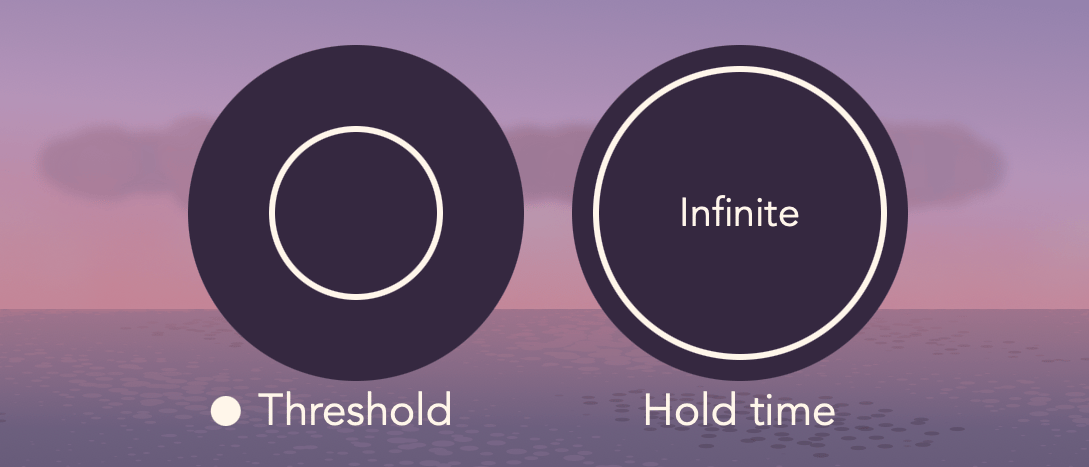
Coastline basically captures audio and sustains it. You can think of it sort of like a looper, but rather than playing back the recorded audio as a loop, it reimagines and resynthesizes the sound infinitely. It’s kind of a spiritual sibling and successor to Weeping Wall. Just like WW, you capture sound when the incoming audio meets the Threshold, and you can capture up to five snippets at a time. That sound is sustained until the Hold Time elapses, at which point it dies away. If you’ve used Weeping Wall, you’ll be very familiar with this work flow.
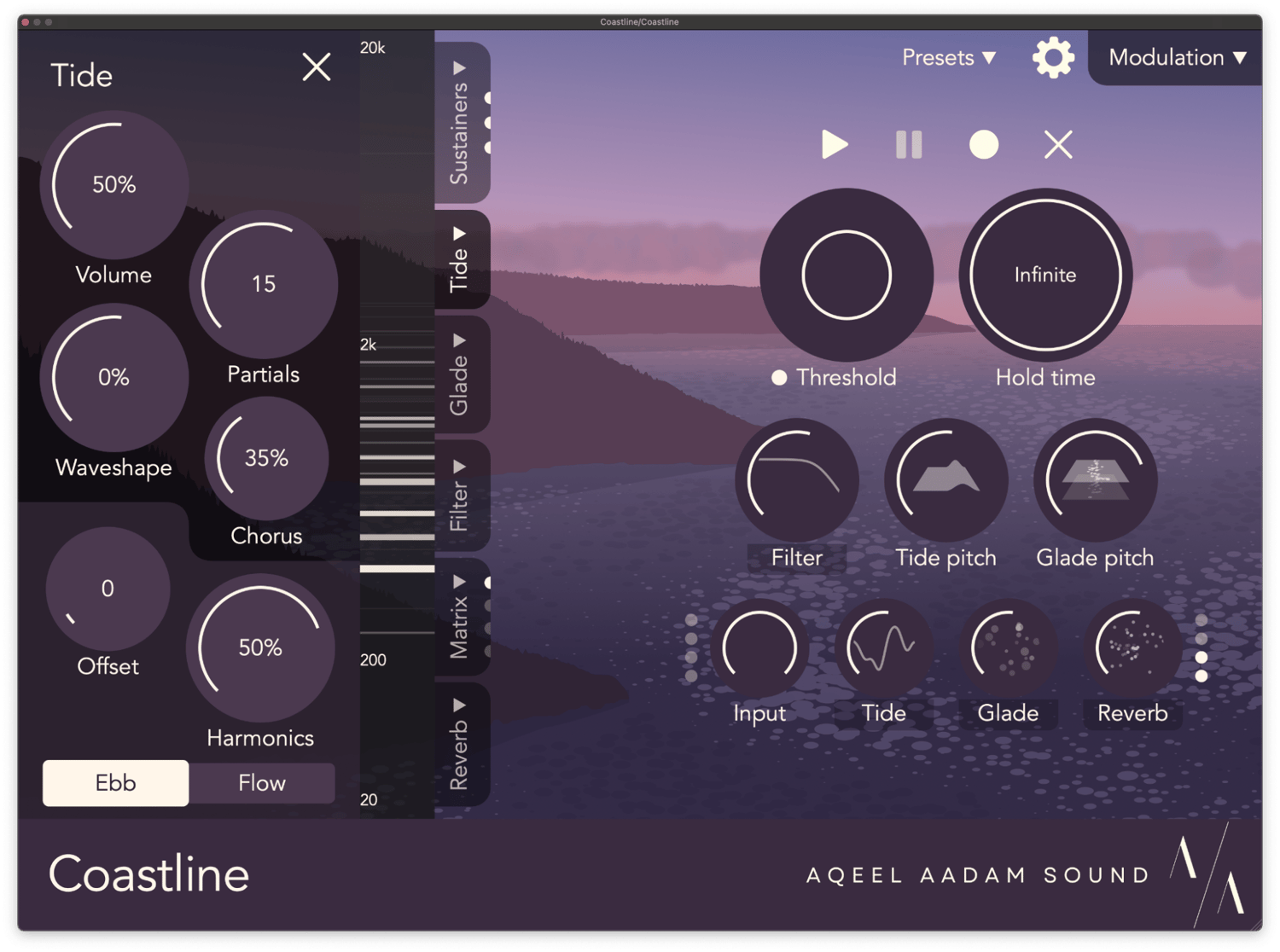
Coastline uses two engines in parallel to sustain your sound: Tide and Glade. Tide is an additive resynthesizer. It analyzes the frequencies in a recording, and assigns oscillators to them. If you’ve used Outgrowth, this process is very similar to the Radiate engine. Coastline takes this concept much further, though. Tide lets you choose how many frequencies you hear, which ones to target, and how they’re balanced (such as highlighting the harmonic or inharmonic frequencies). You can even add totally new harmonics to the signal as well, which might not have been there initially. Finally, you can change the waveshape as well, to really add some depth and complexity to the result.
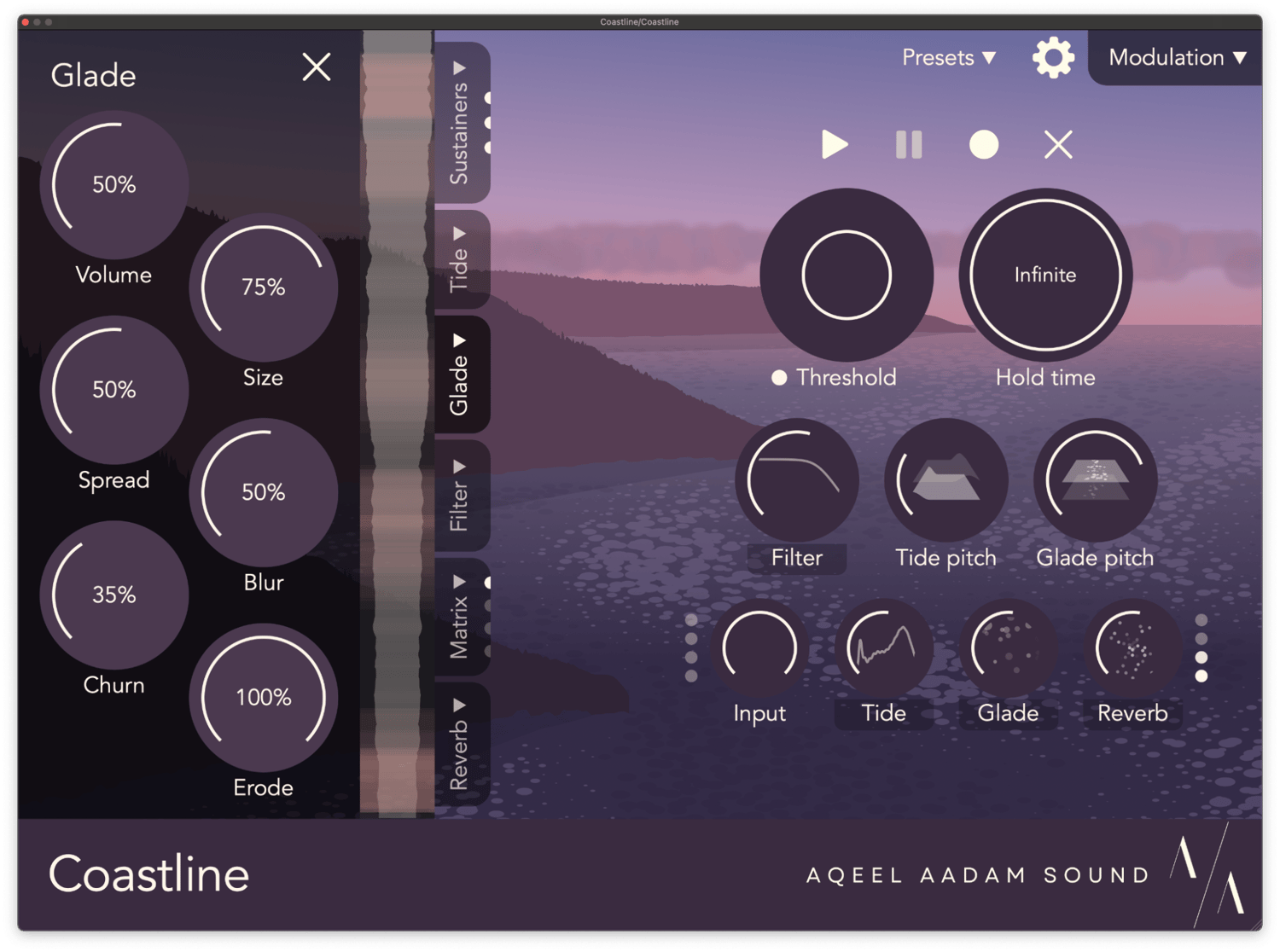
The Glade engine is basically a granular synthesizer. It sustains the sound indefinitely using a cloud of short grains. You can configure the size, position, and movement of grains, and balance the volume of playback to smooth everything out (similar to Outgrowth’s Subvert control). Glade also analyzes the signal for any harsh transients and clicks and avoids them during playback. Given that this engine actually uses the original audio, Glade maintains the timbre of a sound (while Tide distills it down to its purest form). Together, you can balance how much of the original sound is preserved, and how much is morphed into something totally new.
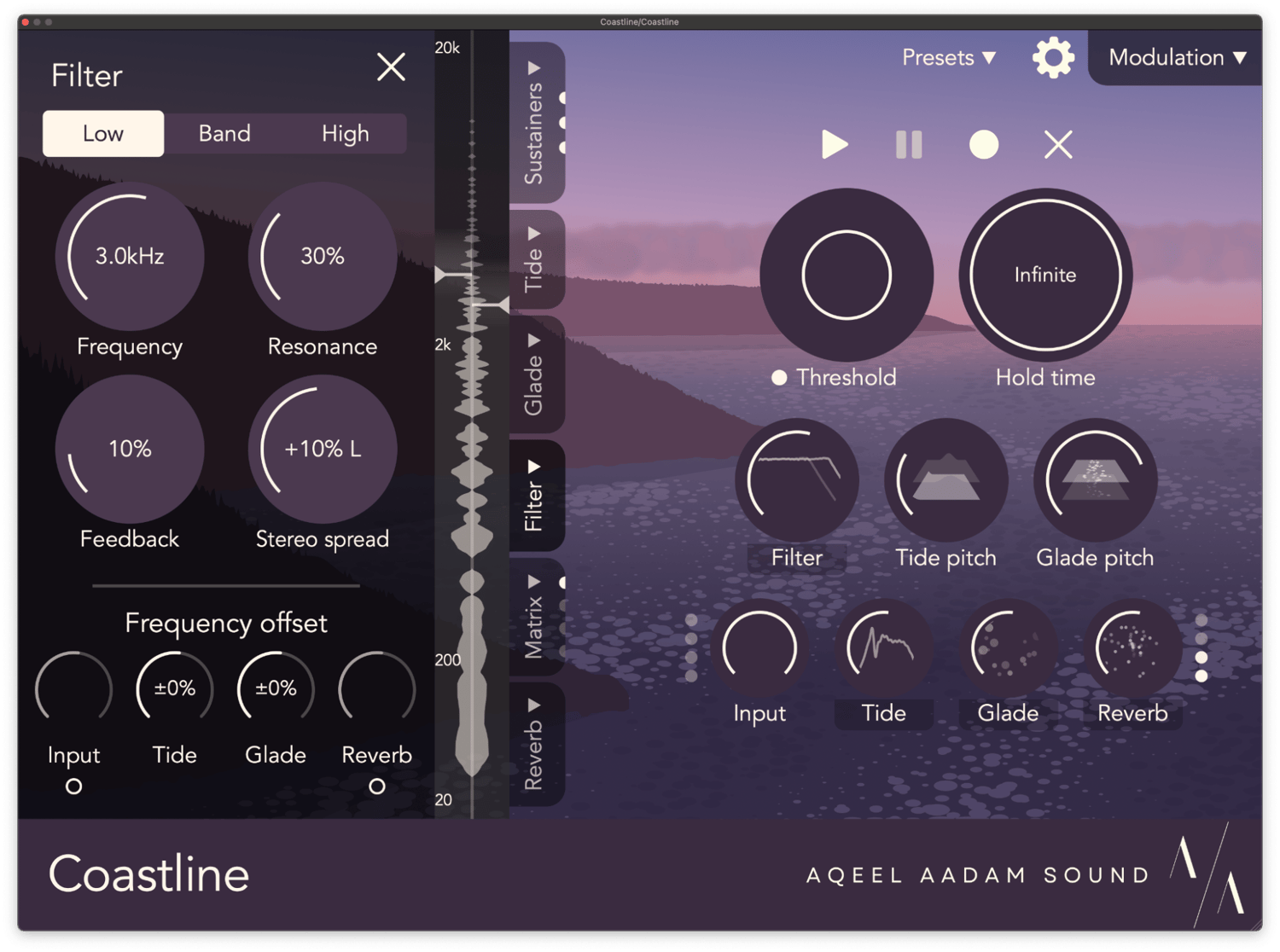
Coastline also features a robust filter and reverb for shaping your sound further. With the filter, you can carve your sound exactly how you want, add movement, create resonant sweeps, or even use it as a distortion source with feedback modulation. You can choose which channels get routed through the filter as well – including the dry (you could totally use Coastline as just a filter, in a pinch). The reverb serves to round out Coastline’s sound, and give you an extra layer of atmosphere and depth.
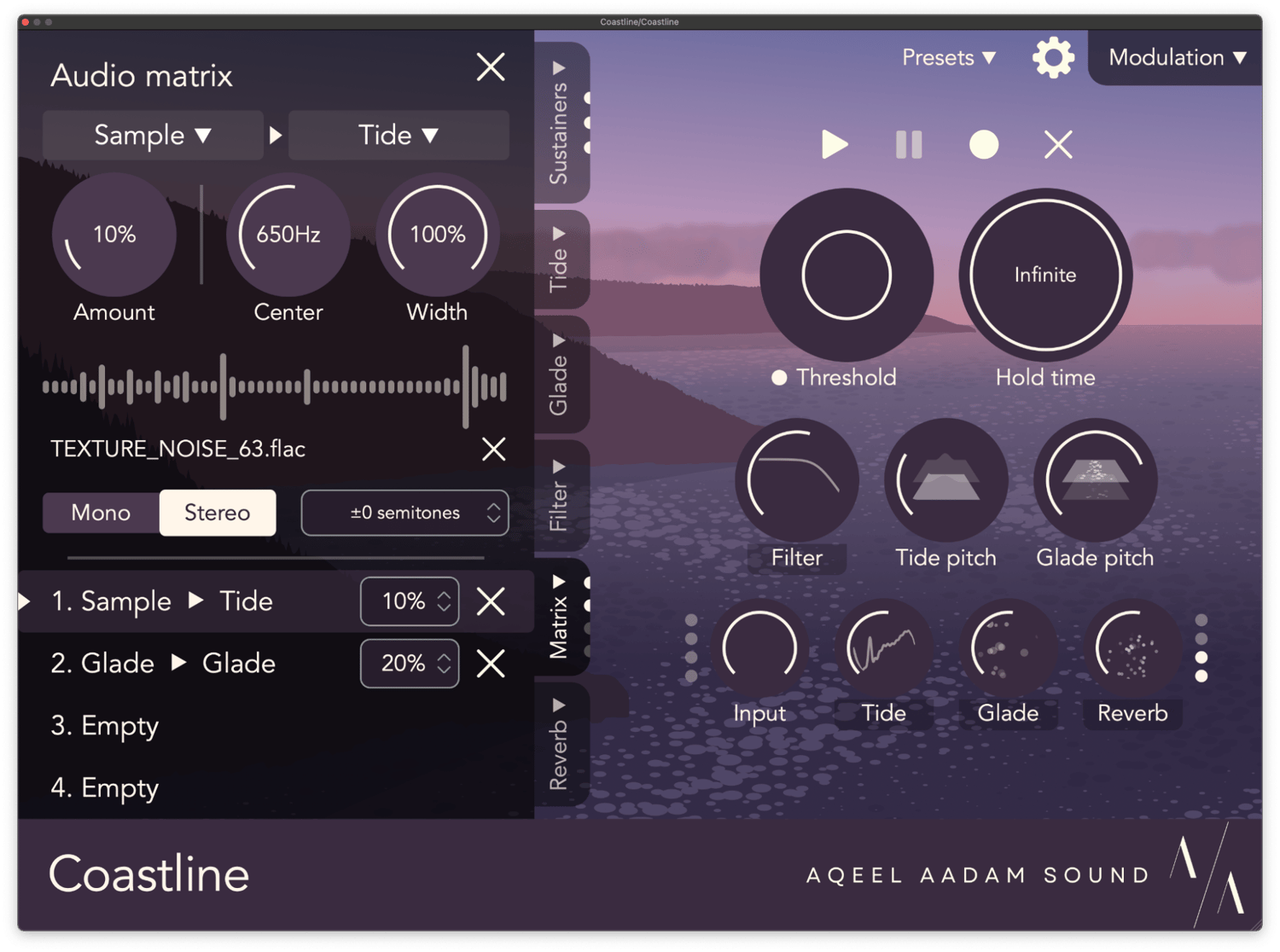
The most powerful feature of all, however, may just be the Audio Matrix. This is a fully modular audio effect where the different channels of Coastline (input, Tide, Glade, reverb) can cross-modulate each other, or themselves. This was kind of inspired by the West Coast synthesis practice of modulating two oscillators together for a complex result – I found myself wondering, “what if you could do that with any audio?”. This is a really powerful concept, and everything works pre-fader as well, so you can mute a channel but still use it as a modulation source. This makes Coastline’s engines something more than just audio generators, and something more like fully fledged utilities. You can also load samples into it as well, and Coastline ships with a number of field samples by my friend Nathan Moody. It’s a true playground of texture, noise, and distortion.
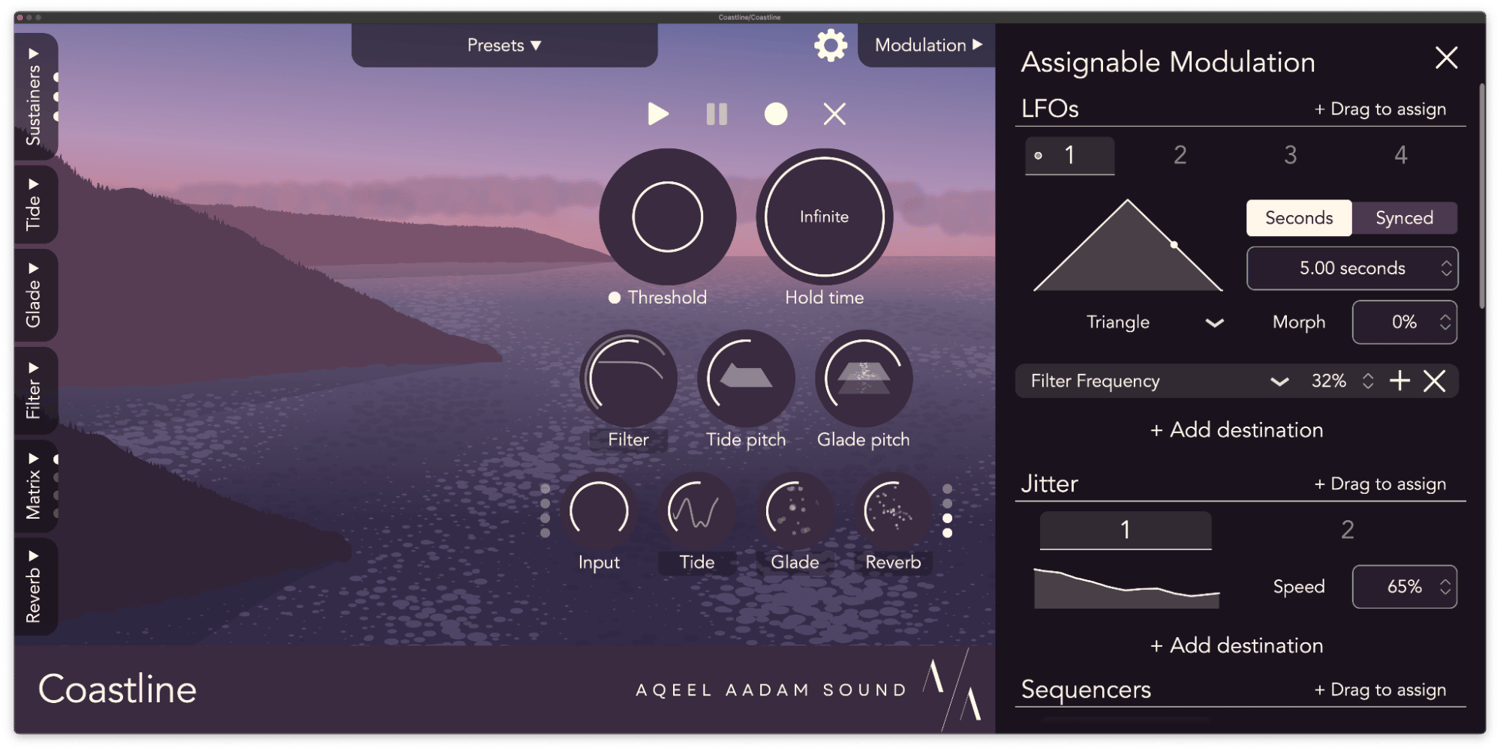
All of this is, of course, compounded with a fully fledged Modulation menu, to make Coastline incredibly configurable and performable. It takes Outgrowth’s menu to the next level – it’s got 4 LFOs, 2 jitter sources, 2 sequencers, and a slew of reactive and performance-based modulation as well. The Modulation menu is something I intend to include in all major products going forward and I hope will become a signature of Aqeel Aadam Sound.
Oh, and it works with Waymaker, too.
All in all, I think Coastline is beyond a “looper” or “freeze effect” and is a true audio workstation. When I use it, it feels like the modern version of building tape loops on a Tascam. You can build up a vibe with a few recordings, get the pieces talking to each other, and sculpt the entire result. You can use it as an audio effect to sit in the background and sound pretty, or it can be the hub of an entire compositional process.
A new chapter
I believe Coastline sets a new standard of product excellence that I intend to maintain going forward. As I said at the top, I’ve learned a ton over these years, and I hope that product and design experience shines through.
I think Coastline really nails the balance between “doing the thing” while also giving you endless depth and options. My goal is that your first five minutes are just as gratifying as your 50th hour with it. Nothing makes me happier than working with a tool and thinking “I wonder if I can do this… oh my, I can!” and I think Coastline will offer that experience in spades.
I have plenty of ideas on the horizon that I’ll be building next. I’m feeling super motivated to get them out there, and I’m excited to have you along for the ride! I truly hope you enjoy Coastline, and what comes beyond.